In a mountain village in Sardinia, a woman in her nineties still walks to the market with a basket on her arm. In Okinawa, men who have seen a century still tend their gardens. In a small town in Costa Rica, grandfathers ride bicycles to visit grandchildren who are themselves grandparents. Researchers gave these places a nickname — the Blue Zones — and went looking for a secret. They expected a supplement, a spring with magic water, a gene. What they found was a dinner table.
Table of Contents
- Let Plants Carry the Plate, Not Just Decorate It
- Stop Eating Slightly Before You Feel Full
- The Kitchen Is Doing More for You Than the Pharmacy Shelf
- Watch the Quiet Trio: Sugar, Salt, and the Ultra-Processed Habit
- Eating Together Is a Health Habit, Not a Luxury
- Seasonal, Local, and Happily Unfashionable
- Frequently Asked Questions
- Do I have to give up meat completely to eat the way long-lived people do?
- Is the eighty-percent-full rule just another way of saying I should leave every meal hungry?
- I have almost no time to cook. Which single home-cooking habit gives the most benefit?
- Are expensive superfoods and supplements necessary for eating to live longer?
- How long before eating this way starts to make a noticeable difference to how I feel?
Nobody in these places is on a diet. Their eating looks almost boring from the outside: vegetables, beans, grains, olive oil, fish now and then, food cooked at home and eaten slowly with other people. The extraordinary part is not any single meal. It is that this pattern repeats, quietly, for eighty or ninety years.
You do not need to move to a Greek island to borrow the pattern. Most of it travels well, because most of it is not about exotic ingredients. It is about proportions, pace, and habits your grandmother would probably recognise.

Let Plants Carry the Plate, Not Just Decorate It
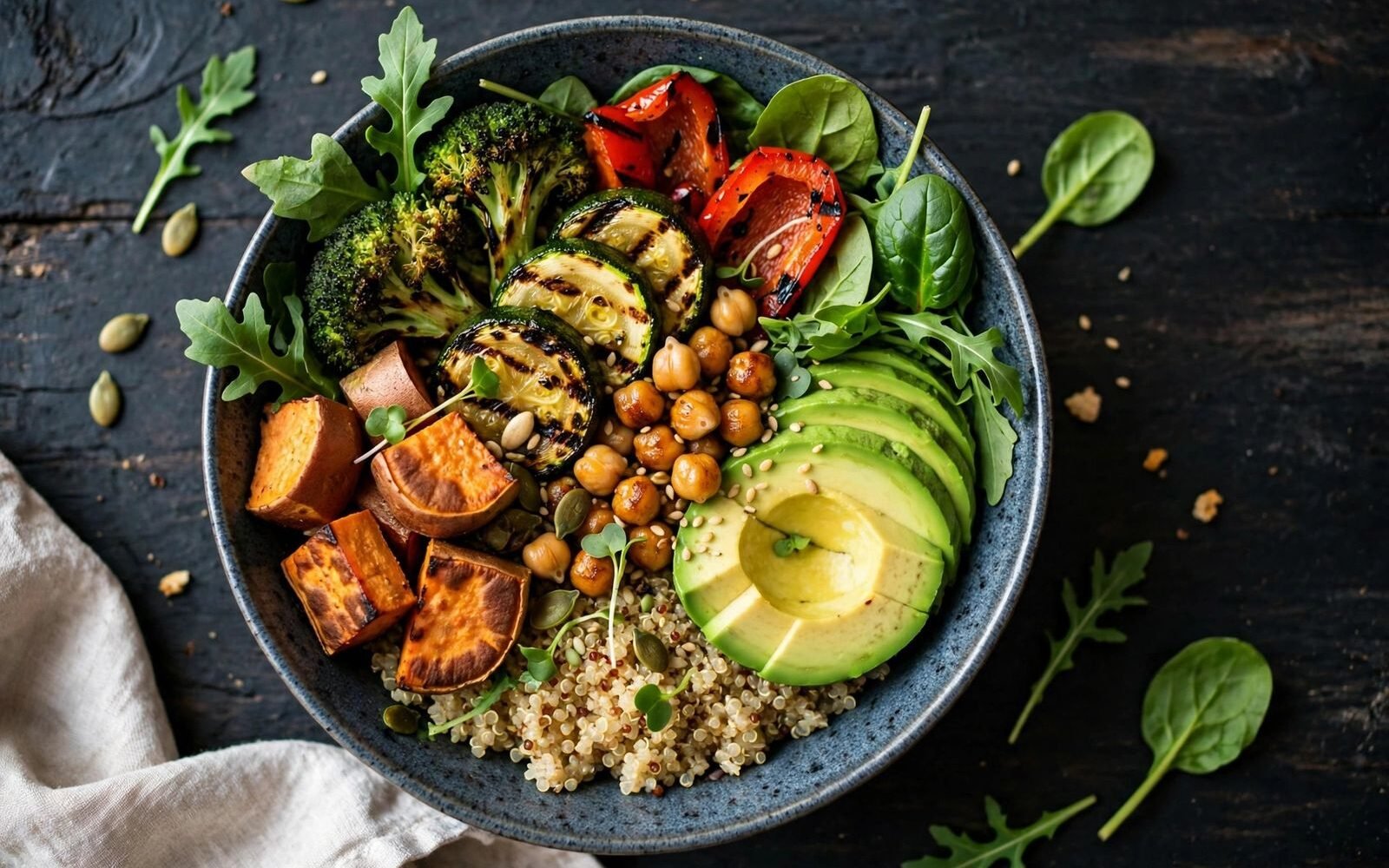
In long-lived communities, roughly nine-tenths of what people eat comes from plants. That sounds dramatic until you see what it means in practice: lentil soup with a piece of meat for flavour, a large salad beside a modest portion of fish, beans and rice where the beans do the heavy lifting. Meat shows up a few times a month, often in small amounts, treated more like a seasoning than the main event.
This is not an argument that everyone must become vegetarian. It is an argument about order. When vegetables, legumes, and whole grains take the lead, a plate naturally becomes high in fibre, filling without being heavy, and kinder to your wallet — dried beans and seasonal vegetables are among the cheapest foods in any market on earth. The meat does not disappear. It just stops auditioning for the starring role at every single meal.
A practical way to start is the half-plate habit:
- Fill half the plate with vegetables before anything else goes on it
- Make beans, lentils, or chickpeas the base of at least three dinners a week
- Keep meat portions closer to the size of a deck of cards than the size of the plate
- Choose whole grains — brown rice, whole-wheat bread, oats — as the default, not the exception
- Use olive oil or another unsaturated oil as your everyday cooking fat
None of this requires a special shop or a special budget. It requires deciding, once, what a normal plate looks like in your house, and then letting that decision repeat itself.
Stop Eating Slightly Before You Feel Full
Okinawa has a saying people repeat before meals: eat until you are eight parts full out of ten. It sounds like a small thing. It is not. Your brain needs roughly twenty minutes to register that the stomach has had enough, which means the person who eats until they feel completely full has, by definition, already overshot. Stopping at eighty percent is not deprivation. It is simply stopping on time.
Restaurants and generous home cooks work against this habit. Plates arrive loaded, and most of us were raised to finish what is served. A few quiet tricks help. Serve food in the kitchen rather than placing overflowing dishes on the table, so seconds require a decision instead of a reflex. Use a slightly smaller plate; the same portion looks abundant instead of skimpy.
Give it two weeks and something interesting happens. The eighty-percent point starts to feel like the natural end of a meal rather than a restraint. Your body recalibrates what “enough” feels like, and it does so without a single rule about forbidden foods.
The Kitchen Is Doing More for You Than the Pharmacy Shelf
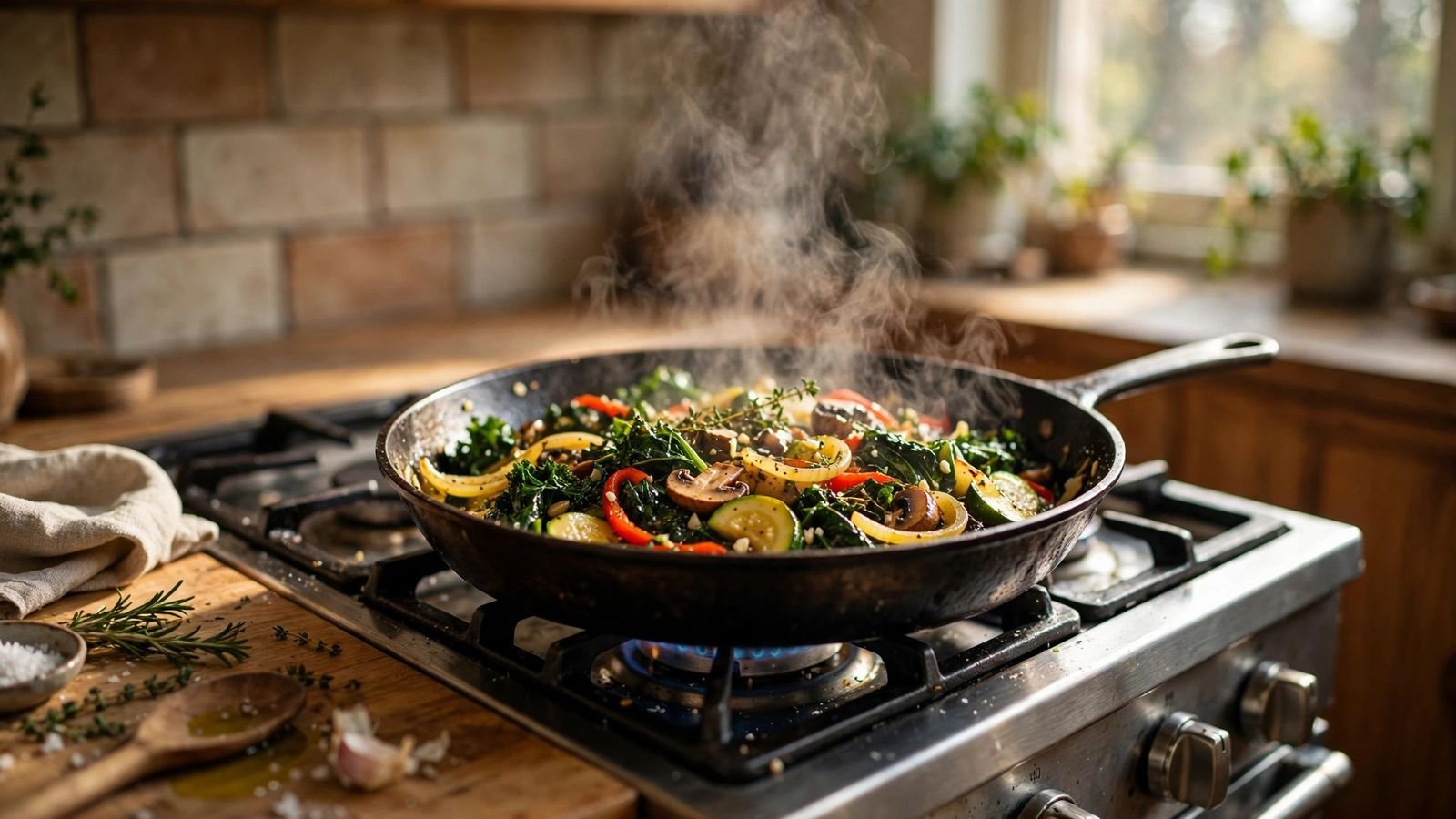
Home cooking quietly controls the three ingredients that restaurants and packaged foods overuse: oil, salt, and sugar. When you cook, you see the oil go into the pan. You taste for salt yourself. Dessert is something you choose to make, not something that arrives free with the meal deal. Studies of long-lived populations keep circling back to this unglamorous fact: most of their food is prepared at home, from ingredients that still look like themselves.
There is a second effect, harder to measure and easy to feel. Cooking slows the whole ritual down. Chopping, stirring, waiting for bread to rise — these are not chores bolted onto eating; in long-lived cultures they are part of eating. Food takes time to prepare, so it is eaten with more attention when it arrives. Compare that with a meal ordered, delivered, and finished in eleven minutes in front of a screen. The calories may be similar. The experience, and the satisfaction, are not.
If you currently cook twice a week, do not announce a revolution. Cook three times. Add one reliable soup, one tray of roasted vegetables, one pot of lentils that reheats well on busy days. Skill in the kitchen is mostly a handful of forgiving recipes repeated until they are yours.
Watch the Quiet Trio: Sugar, Salt, and the Ultra-Processed Habit
The longest-lived eaters are not reading ingredient labels with a magnifying glass. They simply live in food environments where the default is unprocessed. Most of us live in the opposite environment, where the default snack is engineered to be irresistible and the default drink contains more sugar than dessert. You cannot move your environment, but you can rearrange your corner of it.
Start with drinks, because they are the easiest win. A daily soft drink or sweetened juice adds a steady stream of sugar that never fills you up. Swap it for water, sparkling water with lemon, or unsweetened tea, and you have changed your diet meaningfully without touching a single meal. Keep the sweet drink for occasions if you love it — occasions, not Tuesdays.
Then look at the snacks within arm’s reach. Nuts, fruit, roasted chickpeas, and yogurt satisfy hunger in a way crisps deliberately do not. Nobody in a Blue Zone is snacking on flavoured corn puffs at midnight, not because their willpower is heroic, but because the puffs are not in the house. What is not in the house rarely gets eaten. That sentence is worth more than most diet books.
Salt deserves the same calm treatment. Most excess salt arrives hidden in bread, sauces, processed meats, and restaurant food rather than from your own salt shaker. Cooking more at home, tasting before salting, and letting lemon, herbs, garlic, and spices do more of the flavour work gradually retrains your palate. Within a few weeks, food you once enjoyed starts tasting noticeably salty — your taste buds have adjusted, quietly, in your favour.
Eating Together Is a Health Habit, Not a Luxury
In Sardinia, meals are events. In Okinawa, people form small circles of friends who commit to each other for life and, among other things, eat together regularly. Shared meals do three things at once: they slow eating down, they make portions more sensible, and they feed a need that has nothing to do with nutrients. Loneliness is corrosive. A table with people around it is, in a very literal sense, protective.
Modern life treats eating together as something that happens when schedules accidentally align. The long-lived treat it as infrastructure — as non-negotiable as sleep. You do not need a farmhouse table and nine relatives. A shared breakfast twice a week, a standing Sunday lunch, a rule that dinner is eaten at a table instead of over a sink: these count. Phones away counts double. A meal eaten while scrolling is a meal half-tasted, and half-tasted meals have a way of sending you back to the kitchen an hour later, vaguely unsatisfied and not sure why.
Seasonal, Local, and Happily Unfashionable
Ask a ninety-year-old in Ikaria what she eats and she will not mention a superfood. She eats what the season hands her: greens in spring, tomatoes and beans in summer, squash and preserved foods when the weather turns. Herbal teas, wild herbs, potatoes, bread she trusts. The menu repeats across the year like a song she knows by heart.
There is practical wisdom in eating seasonally even far from Greece. Seasonal produce is usually cheaper, because it did not travel across an ocean to reach you. It usually tastes better, which matters more than nutrition charts admit — people keep eating foods they enjoy. And a rotating seasonal table automatically creates variety across the year without any planning at all.
Fermented foods deserve a quiet mention here too: yogurt, kefir, pickled vegetables, and similar staples appear in traditional diets around the world. They are inexpensive, they keep well, and they have been part of ordinary home cooking for centuries. The jar your grandmother made counts.
Frequently Asked Questions
Do I have to give up meat completely to eat the way long-lived people do?
No. In most long-lived communities meat has not vanished; it has been demoted. It appears a few times a month, in modest portions, often stretched through a stew or used to flavour vegetables and beans. If you currently eat meat daily, cutting back to a few times a week and letting plants lead the plate already moves you most of the way toward the pattern — no labels, no announcement, no all-or-nothing vow required.
Is the eighty-percent-full rule just another way of saying I should leave every meal hungry?
It should not feel that way, and if it does, you are probably stopping too early or eating too fast. The idea is to finish at the point where you could eat more but do not need to — comfortable, not stuffed, and not still hungry either. Eat slowly, pause near the end of the meal, and give the fullness signal its twenty minutes to arrive. Most people find the satisfied feeling shows up right on schedule.
I have almost no time to cook. Which single home-cooking habit gives the most benefit?
Master one big-pot meal. A lentil soup, a bean stew, or a vegetable curry that takes thirty minutes, reheats beautifully, and covers two or three dinners changes your whole week. Pair it with a grain and whatever salad you can manage. One dependable pot beats a cupboard full of ambitious recipes you never open, and it quietly replaces several takeaway meals without any daily effort of will.
Are expensive superfoods and supplements necessary for eating to live longer?
The diets of the longest-lived people are built from some of the cheapest foods available: beans, lentils, cabbage, greens, oats, potatoes, seasonal fruit. Supplements have their place when a doctor identifies an actual deficiency, but no powder has ever reproduced what a varied, plant-led table provides as a matter of routine.
How long before eating this way starts to make a noticeable difference to how I feel?
People commonly report steadier energy, better sleep, and less of the heavy, sluggish feeling after meals within a few weeks of shifting toward plant-led, home-cooked food — long before any bigger changes could show up. Treat those early signals as encouragement, not proof of anything medical. The real pattern is measured in years, and it is built exactly the way it sounds: one ordinary, decent meal at a time.
Nobody lives to ninety-five because of a single salad. They get there the slow way — thousands of ordinary meals, mostly plants, cooked at home, eaten unhurriedly with people they like. That is genuinely good news, because it means the recipe is not a product you buy or a programme you survive. It is a table you set, again and again, starting with the very next meal. Add one vegetable to lunch tomorrow. Cook one more dinner at home this week. The direction matters far more than the speed.